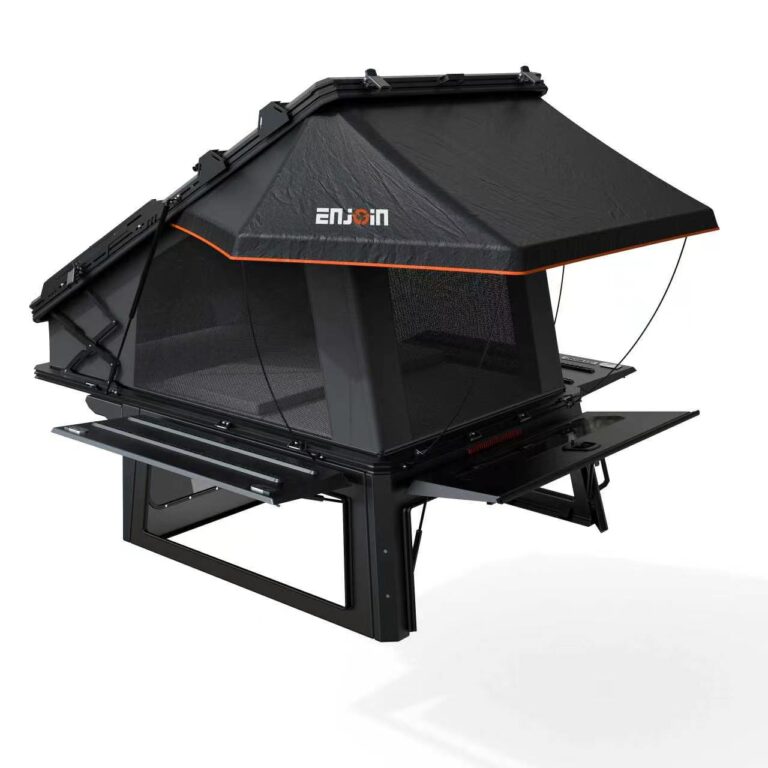
Shipping rooftop tents from China can feel overwhelming—especially because these products are big, heavy, and take up a lot of space. The good news? Once you understand the main shipping options and who handles each part of the process, everything becomes much easier.
In this guide, we’ll walk you through the key points every importer should know. Whether you’re ordering an urgent sample, samll quantity or a full container, this guide will help you pick the most cost-effective and reliable way to ship rooftop tents from China.
Who Handles Rooftop Tent Shipping?

There are four main roles in shipping rooftop tents internationally:
- Shipper – your rooftop tent supplier in China.
- Consignee – that’s you, the buyer.
- Shipping companies – own trucks, ships, or planes and move your tents from point A to B. Most shipping methods besides courier involve multiple companies working together.
- Freight forwarders – act like brokers, coordinating the shipment from the supplier’s factory to your door. They also handle customs clearance.
For bulky items like rooftop tents, it’s often safer to let your supplier handle a trusted freight forwarder. This way, if the tents are lost or damaged in transit, the supplier takes responsibility for their forwarder.
If you prefer working with a freight forwarder directly, you can search online (Google, Freightos, Flexport) or get a recommendation from someone you trust.
Understand Key Incoterms

Before shipping, make sure the trade term (Incoterm) is clear. This defines the responsibilities of you and your supplier for shipping rooftop tents.
Here are the most common Incoterms for rooftop tents:
- ExW (Ex-Works) – You arrange the freight forwarder to pick up tents from the supplier’s warehouse. Price only covers the tents, not shipping or export.
- FOB (Free On Board) – Supplier delivers tents to a seaport or airport and pays export costs. You arrange freight from the port to your warehouse.
- CIF (Cost, Insurance, Freight) – Supplier handles shipping and insurance to your country’s port.
- DDU/DDP (Delivered Duty Unpaid / Paid) – Supplier delivers tents all the way to your warehouse. DDP means they also pay import duty; DDU means you handle customs duty.
For rooftop tents, sea freight is usually the most cost-effective for full batches because of their large size. Air freight is faster but much more expensive, and courier shipping is usually only suitable for small samples or lightweight accessories.

FOB & CIF Explained with Simple Examples
Example 1 — FOB (Free On Board)
You order 12 CBM of rooftop tents, shipped FOB Ningbo.
- Supplier delivers the goods to Ningbo port,China
- Supplier handles export clearance
- You book the vessel and pay the ocean freight
- You handle destination port charges, customs, and final delivery
FOB is ideal if you want control over shipping costs and your own freight forwarder.
Example 2 — CIF (Cost, Insurance, Freight)
You book a full 20-foot container, shipped CIF Los Angeles.
- Supplier handles export, vessel booking, freight, and basic insurance
- Goods arrive at Los Angeles port
- You pay destination port fees, customs clearance, and trucking to your warehouse
CIF is easier for beginners since the supplier arranges the main shipping steps
Sea Freight for Rooftop Tents (Over 2 CBM)

Sea freight is the most common and cost-efficient shipping method for bulky rooftop tents, especially when ordering multiple units. Unlike courier services, sea freight requires coordination between multiple parties rather than being handled by a single company.
What a Freight Forwarder Handles
Depending on the trade term you choose, the freight forwarder’s role starts at different points:
- EXW:
The freight forwarder picks up the tents directly from the supplier’s warehouse. - FOB / CIF:
The supplier delivers the tents to the port or the freight forwarder’s designated warehouse. From there, the forwarder takes over.
In all cases, the freight forwarder also manages:
- Booking container space with the shipping company
- Export and import customs clearance
- Delivery from the destination port to your warehouse

Container Options
Most rooftop tents are shipped in:
- 20-foot container (28 CBM)
- 40-foot container (68 CBM)
You can choose:
- FCL (Full Container Load):
Best for shipments over 20 CBM. The entire container is used for your goods. - LCL (Less than Container Load):
Smaller shipments share a container with other cargo to reduce cost.

Cost Overview
Sea freight for rooftop tents is charged mainly by volume (CBM), not by weight. In normal seasons, rates stay relatively stable and affordable, which is why most buyers prefer sea freight for bulky products like rooftop tents.
Typical reference rates:
- West Coast USA: $100–$200/CBM
- East Coast USA & Western Europe: $200–$300/CBM
- South America: $400+/CBM
However, during peak shipping seasons, the situation changes:
- It becomes much harder to book space, especially on popular China–USA and China–Europe routes.
- Freight rates can increase sharply — sometimes double or even higher compared to off-season prices.
- Small and medium importers may face delays if carriers prioritize large-volume shippers.
Because freight prices fluctuate, your exact shipping cost depends on:
- the destination port
- the shipping company
- the time of year
- whether you use FCL or LCL
For reference, a 20-foot container (suitable for rooftop tents) can vary widely in price from month to month, so it’s best to ask your freight forwarder or supplier for updated rates before finalizing your purchase.
Transit time for sea freight typically remains 30–50 days, including trucking from the destination port to your warehouse.

Peak Sea Freight Seasons (High Rates & Limited Space)
1. September – October (Pre-Holiday Peak)
- Why: Global retailers, especially in the US and Europe, ship early for Black Friday, Cyber Monday, and Christmas.
- Impact:
- Container space becomes very tight
- Freight rates often increase 30–100%
- Booking can be difficult unless done 1–2 months in advance
2. Late November – December (Christmas Rush)
- Why: Last-minute shipments for holiday sales.
- Impact:
- Ports congested, especially US East & West Coast
- Rates remain high
- Transit delays possible
3. January – Mid February (Chinese New Year Peak)
- Why: Chinese factories rush to ship orders before their holiday, and then production pauses for CNY.
- Impact:
- Severe container shortages
- Freight surcharges common
- Booking space requires early planning
4. March – Early April (Post-CNY Rush)
- Why: Backlog shipments after factories resume.
- Impact:
- Moderate congestion
- Prices gradually normalize but still higher than off-season
Air Freight for Rooftop Tents (Urgent Samples Only)

Air freight is generally not used for full rooftop tent shipments due to high cost. It’s mostly suitable for urgent sample orders when waiting 30–50 days for sea freight is not an option.
- Cost: Roughly 3–5× the cost of sea freight for the same volume.
- Example: 1 CBM of rooftop tents can cost $600–$1,200, depending on the destination.
- Arrangement: Handled through a freight forwarder, not a courier like FedEx or UPS.
Why you might use air freight:
- Only for urgent samples or very small, high-priority orders
- Faster than sea freight (typically 5–10 days to most destinations)
Limitations:
- Much more expensive than sea freight
- Customs clearance may require extra documentation
- Not practical for standard orders or bulk shipments
In most cases, sea freight remains the preferred and cost-efficient method for rooftop tents.
Railway Freight for Full Container Load (To Europe)

Rail freight is a growing option for rooftop tents shipped to Europe and parts of Western Asia. It provides a balance between sea and air shipping:
- Cost: About 2× sea freight
- Transit time: Around 15–20 days, faster than sea and more cost-efficient than air
- Only available for countries along the China-Europe railway route
- Usually requires full container load, so small orders may not be suitable
Rail freight is ideal for large European orders when you want faster delivery than sea freight without paying the high costs of air freight.
Handling Customs Clearance for Rooftop Tents

The final step before receiving your rooftop tents is customs clearance. Both exporting from China and importing to your country require specific documents.
For export from China, your supplier usually handles most of the paperwork, including:
- Commercial invoice
- Packing list
- Bill of lading
Some rooftop tents may require additional certificates depending on local regulations, but your supplier can usually guide you.
For import into your country, similar documents are required:
- Commercial invoice
- Packing list
- Bill of lading
Additional certificates may vary based on your country’s rules or product specifics. A reliable freight forwarder or customs broker can help you identify what’s needed.
You will also need to pay customs duties, which differ by country and product type. For example, importing rooftop tents may involve import duty, VAT, or other fees. Your freight forwarder can provide exact rates.
You can consult freight forwarders or your customs broker for documents required and product duty rates.
To Wrap Up

I hope this guide has helped you better understand how to import rooftop tents from China and feel more confident in your sourcing decisions. If you have any questions about today’s topic, leave a comment below—we’re happy to help.
ENJOIN is a leading rooftop tent manufacturer and supplier, helping clients import high-quality rooftop tents from China. If you’re ready to import the best rooftop tents from China, CONTACT US today.